Box Breathing: The 4-Second Pattern Navy SEALs Use to Stay Calm
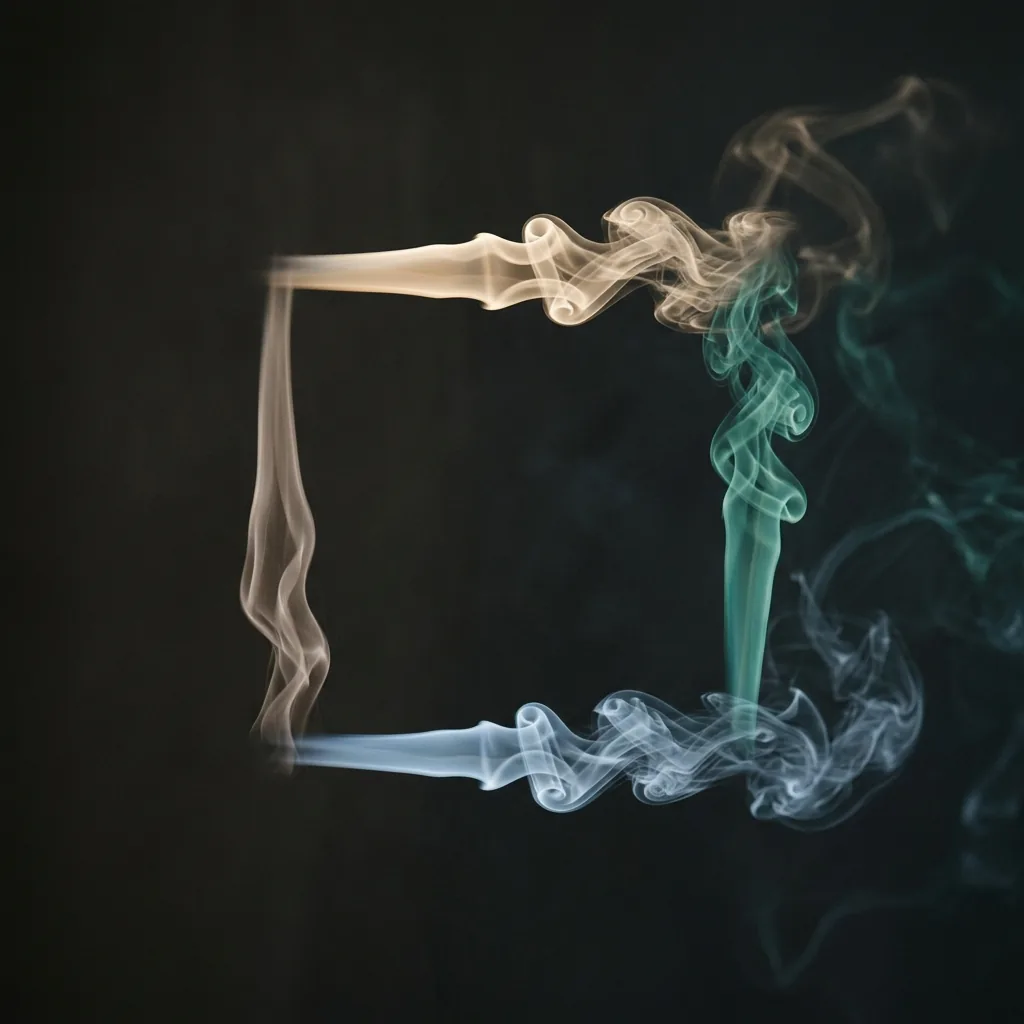
Box breathing is four seconds in, four hold, four out, four hold. One cycle takes sixteen seconds, so four cycles is roughly a minute. Tactical-medicine instructors, ER staff, and a long list of busy professionals use it before high-stress work. In a 102-person controlled trial, this exact 4-4-4-4 pattern reduced post-stressor heart rate as well as longer-exhale patterns did. Here is how to practice it, what the research actually shows, and when to use a different pattern instead.
The pattern in one minute
Box breathing has four equal phases. The math is friendly enough that you can do it on your fingers.
| Phase | Count |
|---|---|
| Inhale (through the nose) | 4 seconds |
| Hold (lungs full) | 4 seconds |
| Exhale (through the mouth) | 4 seconds |
| Hold (lungs empty) | 4 seconds |
One cycle is 16 seconds, which works out to 3.75 breaths per minute. Four cycles is roughly one minute. Eight cycles is roughly two minutes, and that's the most useful starting dose for almost everyone reading this. The pattern is symmetric on purpose. Easy to remember, easy to count, forgiving for beginners. That mnemonic simplicity is half the reason it spread.
Why it works (and what the research actually shows)
Slow paced breathing engages the parasympathetic side of your nervous system through two main channels. Stretch receptors in the lungs send afferent signals along the vagus nerve up to the brainstem. Baroreceptors in your carotid arteries time their firing to your breath, slowing the heart on each exhale. The result is a measurable shift toward rest-and-digest within the first minute or two. (We covered the mechanism in depth in the vagus nerve post, and you don't need to read it to use this one.)
The closest peer-reviewed evidence for the specific 4-4-4-4 pattern comes from Sebastian Roettger and colleagues' 2021 randomized study in Applied Psychophysiology and Biofeedback (N=102). They tested combat tactical breathing (the military name for the same equal-count pattern) against a prolonged-exhalation pattern and a passive control after a stress induction. Both slow-breathing groups recovered their heart rate faster than the passive controls. The 4-4-4-4 pattern performed comparably to prolonged exhalation, despite the symmetric ratio that some breathwork teachers consider physiologically inferior. Modest effect sizes, healthy young adults, single-session paradigm. But it's one of the few studies that names the pattern and tests it directly.
The broader meta-evidence sits in Sylvain Laborde and colleagues' 2022 systematic review in Neuroscience and Biobehavioral Reviews, which pooled around 58 studies on voluntary slow breathing. They found small-to-medium increases in vagally-mediated HRV (RMSSD, high-frequency power) and modest reductions in heart rate compared with spontaneous breathing. Box at 3.75 breaths per minute sits inside the meta's "slow breathing" envelope, though the meta doesn't isolate the symmetric ratio. Honest framing matters here: the active ingredient is the breath rate, not the symmetric counts. The 4-4-4-4 pattern is one accessible point inside a wider band of slow paced breathing.
A single five-minute session of slow breathing at six breaths per minute also reduced self-rated state anxiety in a 64-person study by Magnon, Dutheil and Vallet (Scientific Reports, 2021). The tested rate was slightly faster than box at 4-4-4-4, so this is supportive evidence rather than direct evidence for the exact pattern. Still, the takeaway's real: a single short session moves the needle on a self-report measure of anxiety in healthy adults. Cleveland Clinic's health library calls box breathing a stress-management tool for healthy adults and recommends it as an entry-level practice. That lay-clinical framing tracks with the research.
Where the "Navy SEAL" framing actually came from
You'll see "Navy SEALs use box breathing" in almost every wellness article on the topic. The story's mostly accurate. The detail most pages skip is who specifically. It's Mark Divine, a retired U.S. Navy SEAL Commander and the founder of SEALFIT and the Unbeatable Mind training programs, who popularized box breathing in civilian audiences. His 2014 book Unbeatable Mind and the 2016 follow-up Kokoro Yoga are where most of the modern "the SEALs use this" framing traces back to, not to an institutional Navy curriculum.
The pattern itself entered military and law-enforcement training literature earlier through Lt. Col. Dave Grossman's On Combat (2008/2014), where the equivalent four-equal-count technique is called "tactical breathing." First responders still call it that. One thread on r/EMS put it bluntly: "We call it tactical breathing, civilians call it box. Same thing." Useful to know if you've been telling friends a slightly inflated story.
How to practice your first session
- Sit somewhere you can stay still for two minutes. Feet flat on the floor, hands resting in your lap, shoulders soft.
- Place one hand on your belly. You'll use it to check that the belly rises on the inhale, not just the chest.
- Inhale through your nose for four seconds. Slow and gentle, no athletic effort.
- Hold for four seconds. An easy pause, not a breath-hold test.
- Exhale through your mouth for four seconds. Slightly pursed lips help control the rate.
- Hold for four seconds.
- Repeat the cycle for two minutes (about eight rounds).
- Notice anything that shifted before you stand up.
A note on the holds. They should feel like gentle pauses at the top and bottom of the breath, not tense plugs. If four seconds feels tight, drop to three (3-3-3-3 with the same equal-phase structure). The rhythm matters more than the exact count. Build back up to four when it feels easy.
Variations worth knowing. Once 4-4-4-4 feels boring (good signal), 5-5-5-5 or 6-6-6-6 sit closer to the cardiorespiratory resonance frequency and probably produce a slightly stronger HRV-training effect, at the cost of being harder to hold without a visual cue. Move there after a couple of weeks. Eyes open, softly fixed on a point, is the right default for daytime focus work. (Closed eyes drift you toward sleep, which isn't what you want at 2pm.) Box is also forgiving on nasal versus mouth breathing. 4-7-8 isn't.
When to use it
Box is the least specialized of the major patterns, which makes it almost annoyingly useful. A few real scenarios.
Sarah runs a small design agency. Before every pitch, she does two minutes in the elevator. Her resting heart rate going into pitch meetings used to read in the mid-90s on her watch. After a few weeks of pre-meeting box breathing, she sees mid-70s walking into the room. (Anecdotal, single case. But she's used it for a year and the pattern holds.)
Marcus does on-call shifts in an ER. Between codes, he does one minute of 4-4-4-4 at the nurse's station before charting. He says it's the only thing that resets him without making him drowsy.
Anyone in deep work mode. Two minutes of box between meetings is a different category of useful than coffee. It works on your nervous system, not just your alertness. (The physiology is the same one Magnon and colleagues measured with HRV and self-rated anxiety in 2021.) One reader on r/productivity called it "the only thing that resets my brain between meetings." That tracks.
During mild anxiety waves. Slow breathing in this rate band has the meta-analysis evidence behind it. Pick box if 4-7-8's longer exhale feels triggering for you (a recurring pattern in r/Anxiety threads). And if you're brand new to breathwork, start with the two-minute daily-habit setup, then come back here.
When NOT to use it
An honest list, because most pages don't bother with one.
- Severe panic disorder or a recent cardiac event. Talk to a doctor before starting any new breathing practice. Slow breathing can occasionally feel paradoxically activating for some panic-prone individuals. If that's been you, work with a clinician.
- Lightheadedness or tingling during the holds. That's a signal you're over-breathing on the inhale or pushing the holds too hard. Soften the inhale, drop the count to three seconds. Tingling fingertips means you're heading toward respiratory alkalosis, not dangerous at this rate but definitely the wrong feedback signal.
- As a sleep-onset tool. Box keeps you alert in a calm way. For sleep, the longer exhale of 4-7-8 works better, because the exhale-dominant pattern produces a stronger parasympathetic shift. (More on that in the dedicated 4-7-8 post once it's live.)
- Inside an active panic attack. Box can help during a mild spike. During a full attack, the priority is grounding and getting professional support, not perfect counting.
How box compares to other patterns
Most breathing apps push every pattern as if they were interchangeable. They aren't. Here's the honest comparison.
| Pattern | Best for | Session length | Difficulty |
|---|---|---|---|
| Box (4-4-4-4) | Stress, focus, pre-performance | 2 to 5 min | Beginner |
| 4-7-8 | Sleep, winding down | 1 to 4 cycles | Beginner |
| Resonance (~6 bpm) | HRV training, daily practice | 5 to 20 min | Intermediate |
| Wim Hof | Cold training, breath-hold work | 10 to 15 min | Advanced (safety-gated) |
My ordering, if you asked. Start with box for two weeks. Add 4-7-8 at bedtime if you also want a sleep tool. Move to resonance breathing once you want measurable HRV training over months. Keep Wim Hof in the "I've decided to add an advanced practice" bucket, not the starter set. Most apps and YouTube videos invert this and push Wim Hof first because it photographs well and the content travels. That's marketing, not coaching. (For the full safety picture, see the dedicated contraindications post before you try it.)
Practice tips that fix the common errors
- Don't hyperventilate. If your fingers tingle or you feel lightheaded, you're inhaling too aggressively. The whole pattern should feel almost boring. Athletic breathing is for sprints, not box.
- Mouth versus nose. Inhale through the nose, exhale through the mouth is the classic recipe. Nose-in slows the inhale automatically because the nasal resistance does the work. If your nose is congested, mouth-only is fine.
- Eyes open during focus work. A daytime session with eyes closed wants to become a nap. Keep them open and softly fixed on a single point a few feet away.
- Two minutes daily beats ten minutes weekly. The habit-formation literature is unusually clear on this. Phillippa Lally and colleagues' 2010 study (96 participants tracked over 84 days, European Journal of Social Psychology) found context-cued repetition matters more than session length, and the median time to automaticity was 66 days. Show up small, every day.
- Use a timer or a visual pacer. A phone stopwatch works fine. So does counting in your head, though the count tends to drift after the second cycle when your eyes start to close. If you want the timing handled visually, BreathSesh has Box Breathing in the free tier. The premium patterns (Calm Breathing extras, 4-7-8, and Wim Hof in both guided and freestyle modes) unlock with a one-time $7.99 purchase, no subscription.
Where BreathSesh fits if you want a tool
Honestly, you don't need an app for this. (I used a kitchen timer for a couple of years before testing apps for this column, and it worked fine.) The small upgrade an app provides is being able to close your eyes while a visual or audio pacer handles the count for you, and to keep the session entirely off your home screen so you stay off your phone. BreathSesh is the version of that I keep on my home screen, partly because Box Breathing comes free and partly because the whole app runs offline without an account, ads, or tracking. The premium patterns sit behind a one-time $7.99 unlock, not a subscription.
The bottom line
Two minutes a day, five days a week, for two weeks. That's the box breathing experiment worth running. Pick a cue you already do daily (your morning coffee, the walk to your desk, the moment after you put the kids to bed), sit down, breathe four counts in and four counts out, twice each cycle, for eight rounds. Notice what shifts. If your anxiety is severe enough that an experiment isn't enough, please see a clinician and (when it's live) the dedicated breathing exercises for anxiety post. Otherwise, start tomorrow morning. Better yet, start in the next ten minutes.
Try BreathSesh
Learn what BreathSesh does, browse features, and get support resources.
Frequently Asked Questions
- How long does it take to feel an effect?
- Most people notice a small subjective shift (steadier chest, slower racing thoughts) within the first 60 to 90 seconds, which lines up with how quickly slow breathing engages the parasympathetic side of the nervous system. The bigger reset usually arrives by minute two. Measurable longer-term effects on baseline HRV typically take 4 to 8 weeks of near-daily practice. The acute calm is the lower-hanging fruit.
- Can I do box breathing while driving?
- Yes, box at 4-4-4-4 is safe behind the wheel. The four-second holds are short enough that healthy adults stay alert and oriented throughout, and the pattern is mild enough that it doesn't produce the lightheadedness that longer holds can. (Wim Hof breathing, by contrast, should never be done while driving. Different category of pattern, much higher syncope risk.)
- Is four seconds too long for me to start with?
- It might be on day one, and that's fine. If the inhale or the holds feel tight, drop to 3-3-3-3 with the same equal-phase structure. Build back up to four seconds when it feels easy, usually within a few sessions. The ratio matters more than the exact count, and a shorter, comfortable cycle beats a longer one that strains your chest.
- Is box breathing safe during pregnancy?
- Slow paced breathing at 4-4-4-4 is generally considered safe during pregnancy because there's no extended retention or deliberate hyperventilation involved. That said, every pregnancy is different. If you have cardiovascular concerns, low blood pressure, or have been told to avoid Valsalva-style holds, talk to your obstetrician first. The Wim Hof Method is a separate question entirely (it's contraindicated during pregnancy).
- Does box breathing help with panic attacks?
- It can help with the early build-up of a panic spike, especially compared to 4-7-8 (whose longer exhale can feel paradoxically activating for some panic-prone people). It's not a substitute for clinical care during a full panic attack, where grounding and getting professional support take priority over perfect counting. If you live with diagnosed panic disorder, run any new breathing practice past your clinician first.
- Should I breathe through my nose or my mouth?
- The standard recipe is nose-in, mouth-out. Nose breathing on the inhale slows you down automatically because the nasal resistance does the work of pacing. Slightly pursed lips on the exhale help you control the four-second exhale rate. If your nose is congested, mouth-only for both phases is fine. Box's forgiving on this. Other patterns like 4-7-8 are stricter about nasal-in.
- How does box breathing compare to 4-7-8?
- Box is symmetric and exhale-equal. 4-7-8 is exhale-dominant: the long exhale produces a stronger parasympathetic shift, which is why 4-7-8 is the preferred sleep-onset pattern. Box is better for daytime calm and focus because the symmetric counts keep you alert in a steady way without pushing you toward drowsiness. A useful default: box during the day, 4-7-8 at bedtime. (You don't have to pick one. They handle different jobs.)

Written by
Sam RiveraCertified Breathing Coach at BreathSesh Editorial
Sam has coached breathwork for seven years after a career as an endurance athlete. He trained in Wim Hof Method Instruction and Oxygen Advantage, works with pre-performance athletes and busy professionals, and specializes in making the research translate into a two-minute daily practice. At BreathSesh he covers techniques, use-cases, and beginner content.